
WORLD’S FIRST CERTIFICATION ON MENTAL HEALTH TO COLLEGES
GET CERTIFIED TODAY AND BECOME EMOTIONALLY HEALTHY CAMPUS

BENEFITS
- Training to Students on Mental Health and Soft Skills
- Training to Faculties in Psychology
- 24×7 Helpline for the College
- Training to Parents on Mental Health
Why mental health in colleges?
STUDENTS
- Students become more professional
- Students start healthy mental habits
- Students’ performance increases
- Public speaking skills improve
- Nil suicide rate
- Ragging culture becomes zero
FACULTIES
- Faculties also become emotionally healthy
- Learn effective ways to handle students
- Exhibit appropriate behaviours
- Faculties are trained to become a Life Coach
Why soft-skills training alone is a failure?
- Theoretical training does not help
- Soft-skills are basically handling the mind—only psychologists can give the best soft-skills training
- Soft-skills trainers work on external behaviour & knowledge; psychologists work with minds
- Added: Behavioural change needs emotional learning, not just tips & tricks
- Added: Anxiety, shame and inner beliefs block GD/Interview performance until addressed
- Added: Mindset drives communication excellence—confidence first, technique next
- Added: Sustained outcomes come from counselling + practice, not one-time workshops
Campus Training Moments




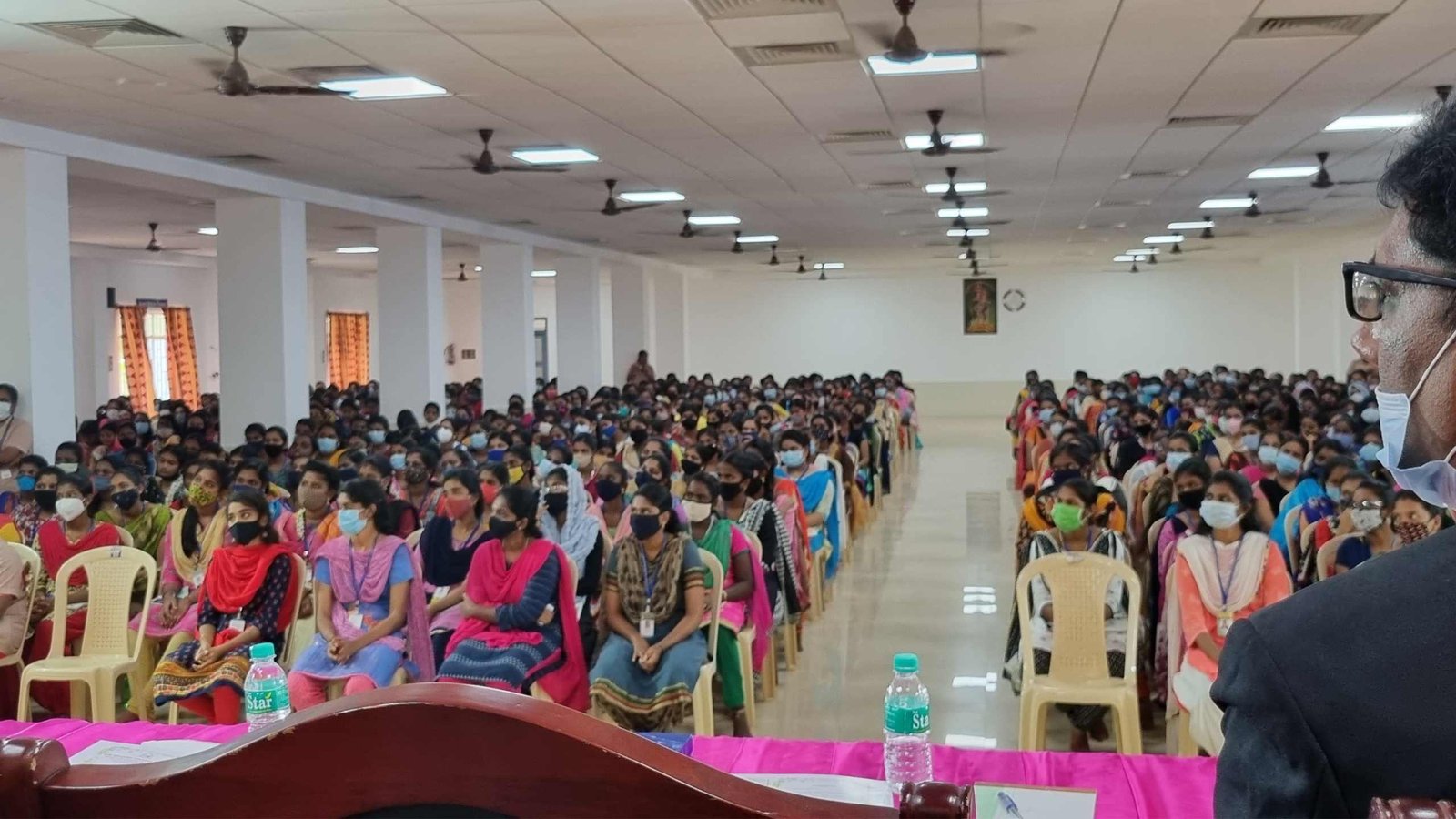


See It in Action (Click to Play)
EMOTIONALLY HEALTH STUDENTS OF MARUTHAR KESARI WOMEN COLLEGE
NEUROBICS TRAINING AT COLLEGES FOR MENTAL HEALTH – BY RESHMA AND JEYAPRIYA OF EMOCARE
MOTIVATIONAL SPEECH OF SEETHALAKSHMI SIVAKUMAR AT BON SECOURS COLLEGE, THANJAVUR
MENTAL HEALTH TRAINING – FEEDBACK BY THE STUDENT OF SDM COLLEGE, UJIRE
FAQs
Why mental health in colleges?
Students face addictions, stress and social pressure. Psychological education adds emotional and intellectual support so they handle life positively.
Why is soft-skills training alone a failure?
Technique without inner change rarely lasts. When we work on the mind and address anxiety and beliefs, GD/Interview performance improves naturally.
What benefits do faculties receive?
Faculties become emotionally healthy, learn student-handling strategies, model appropriate behaviours and are trained to coach students effectively.