
Private sessions from your location
Online Overthinking Counselling with Emocare
Access professional support online from India or overseas through a confidential appointment.
Clear the Past · Structure the Present · Empower the Future

Choose the most convenient counselling option
Explore Other Ways to Attend
Why clients choose Emocare
Professional Support Built Around the Individual
Emocare combines assessment-led counselling, practical therapeutic methods and convenient access through three Chennai centres and confidential online sessions.
Counselling Session Payment
Pay the applicable counselling fee to reserve your session. After payment, send your name, payment screenshot, preferred date and preferred time through WhatsApp.
Standard Counselling Session
1-hour session
Choose a Payment Method
GPay mobile number: +91 99621 63122
Pay Securely Through Razorpay →Send Payment Screenshot on WhatsApp →After payment: Send your name, payment screenshot, preferred date and preferred time through WhatsApp. Emocare will allot the available counsellor and confirm the appointment.
Request a Counselling Appointment
After payment, choose your preferred date and time for an online counselling session and send the prepared details through WhatsApp.
Review the Fee
Check the applicable session fee and duration.
Pay to Reserve
Pay through GPay or the secure Razorpay payment page.
Send Your Preferred Slot
WhatsApp your name, payment screenshot, preferred date and preferred time.
Confidential online access
Attend from a private and convenient location
Online sessions may suit adults, students and working professionals who prefer remote support. Use a private room, reliable connection and a device with audio and video.
Online counselling is not an emergency service and may not suit immediate safety concerns or situations requiring direct medical assessment.
When counselling may be helpful
Support for repetitive worry or rumination that feels difficult to disengage from and affects wellbeing or daily functioning.
Repeated mental replay
Past conversations, mistakes or events are reviewed again and again.
Future-focused worry
The mind repeatedly predicts negative outcomes or searches for certainty.
Decision paralysis
Repeated analysis makes ordinary choices unusually difficult.
Sleep difficulty
Thoughts continue at bedtime or after waking.
Reassurance seeking
Frequent checking or reassurance gives only brief relief.
Daily-life impact
Concentration, relationships, study, work or mood may be affected.
How counselling may help
Support is personalised after understanding the concern, its duration, impact, safety needs and individual goals.
Understand the pattern
Identify triggers, themes, emotions and behaviours that keep repetitive thinking active.
Attention skills
Learn grounding and present-focused techniques to redirect attention flexibly.
Cognitive strategies
Examine unhelpful predictions, perfectionism and demands for certainty.
Scheduled problem-solving
Separate practical problems from hypothetical worry and choose useful action.
Behaviour change
Reduce avoidance, repeated checking or reassurance-seeking where appropriate.
Assessment and referral
Explore whether anxiety, depression, OCD, trauma, sleep or health concerns need additional assessment.
Helpful guide
A Practical Guide to Counselling for Overthinking
Overthinking is a common description for repetitive worry, rumination, replaying events or analysing possibilities without reaching a useful decision. It is not a diagnosis by itself. Counselling first considers what the thinking is trying to prevent or solve, how it affects daily life and whether anxiety, low mood, perfectionism, OCD-related symptoms or another concern requires assessment.
Why repetitive thinking can feel difficult to stop
The mind may repeat a question because certainty feels necessary: What if something goes wrong? Did I make a mistake? What does another person think of me? Repetition can briefly create a sense of control, but it often increases doubt and mental fatigue. Avoidance, reassurance seeking, checking and postponing decisions may then keep the cycle active.
Effective support distinguishes productive reflection from circular thinking. Productive reflection leads towards information, a decision or an action. Circular thinking repeats the same material without a workable next step. The counsellor also explores sleep, stress, recent events, relationships, physical health and safety so that techniques are selected for the person rather than applied mechanically.
Learning a different response to thoughts
Counselling may use cognitive restructuring, scheduled worry time, attention training, grounding, mindfulness, acceptance, defusion or structured problem-solving. The aim is not to prevent every unwanted thought. It is to notice thoughts earlier, reduce automatic engagement and choose actions based on evidence, priorities and values instead of fear alone.
Practice between sessions is usually simple and measurable. Examples include recording triggers, limiting reassurance, completing one postponed action, using a decision deadline or returning attention to the present task. Progress may be seen as shorter episodes, less distress, quicker recovery and improved functioning—even when occasional repetitive thoughts continue to occur.
Preparing for a confidential online session
Online support can reduce travel and make continuity easier for people living away from Chennai, working irregular hours or managing family responsibilities. Suitability still matters. A stable connection, private room, charged device and disturbance-free period help the conversation remain confidential and focused. Headphones may improve privacy when appropriate.
Before the appointment, confirm the platform, time zone, professional, fee and what to do if the connection fails. Join from a safe stationary location—not while driving or operating equipment. The professional may ask for the client’s current location and an emergency contact when clinically appropriate, because online care must still include practical safety planning.
Online work can include assessment, discussion, guided exercises and between-session practice, but it is not suitable for every person or situation. If privacy cannot be protected, risk is immediate or symptoms require physical or medical assessment, local in-person care may be recommended. A clear referral is part of responsible support, not a rejection of the client.
Explore the appropriate service page
Choose the page that best matches your location and preferred session mode: Overthinking Counselling · Online Overthinking Counselling · Overthinking Counselling in Chennai · Overthinking Counselling Across India.
Before choosing a service, consider the main difficulty, its duration, its effect on everyday functioning and any previous professional support. Sharing accurate information helps the professional decide whether counselling, another assessment, coordinated care or an urgent local service is the most appropriate next step.
This guide provides general educational information. It does not diagnose a condition, guarantee an outcome or replace individual medical, psychiatric, developmental or emergency assessment. Emocare confirms suitability, the available professional, session mode and applicable fee before an appointment.
Understand How Professional Counselling Can Help
Watch this short Emocare video to understand the role of professional counselling and structured emotional support.
This video provides general information. Your counsellor will recommend an individualised approach after understanding your concerns, circumstances and support needs.
Integrated and individualised support
Therapeutic Approaches We Use
Emocare follows an eclectic counselling approach. After understanding the client’s concerns, goals, age, preferences, safety needs and suitability, the professional may integrate appropriate methods rather than applying one fixed model to everyone.
CBT
Cognitive Behavioural Therapy
REBT
Rational Emotive Behaviour Therapy
NLP
Neuro-Linguistic Programming
TA
Transactional Analysis
ACT
Acceptance and Commitment Therapy
Gestalt Therapy
Awareness, experience and present-focused work
MI
Motivational Interviewing
Art Therapy
Creative and expressive therapeutic activities
Play Therapy
Developmentally suitable therapeutic play
Logotherapy
Meaning-centred therapeutic exploration
Hypnotherapy
Relaxation and focused therapeutic work when suitable
Spiritual Therapy
Values and spiritually integrated support when requested
Family Therapy
Relationship patterns, communication and family systems
MBSR
Mindfulness-Based Stress Reduction
Yoga Therapy
Breathing, movement and mind-body practices
Reiki Therapy
Complementary wellbeing practice when requested
Important: The approach used depends on assessment, professional competence, informed consent and the client’s needs. Complementary practices do not replace medical, psychiatric or emergency care.
Meet Our Therapists
Meet Emocare therapists providing counselling, psychology, career guidance and life-coaching support.

Seethalakshmi Sivakumar
Psychologist, International Life Coach and Trainer
Qualifications: M.Sc. Psychology; PG Diploma in Counselling & Guidance; PG Diploma in Yoga & Behaviour Therapy; B.A. English Literature
Specialisations: Counselling, CBT, couple counselling, life coaching, NLP, hypnotherapy and professional training
Languages: Tamil, English and Hindi
Experience: 20+ years of professional experience
Availability: Available at Ambattur; available at Thoraipakkam and Tambaram by prior appointment
View Professional Profile →
Ms. Uma
Life Coach & Yoga Therapist
Qualifications: UG in Psychology; Diploma in Yoga & Behavioural Science; Diploma in Acupuncture; Diploma in Acupressure; Diploma in Flower Medicine; Diploma in Yoga
Specialisations: Life coaching, relationship coaching, NLP coaching, couple and premarital coaching, alternative therapies and yoga for better health
Languages: Tamil, English and Hindi
Availability: Available at Ambattur; available at Thoraipakkam and Tambaram by prior appointment
View Professional Profile →
Shivahari
Psychologist, Career Analyst and Counsellor
Qualifications: M.Sc. Psychology; MBA (HR); PG Diploma in Guidance and Counselling
Specialisations: Psychology, career analysis, counselling and personal development
Languages: Tamil and English
Availability: Regularly available at Thoraipakkam and Tambaram
View Professional Profile →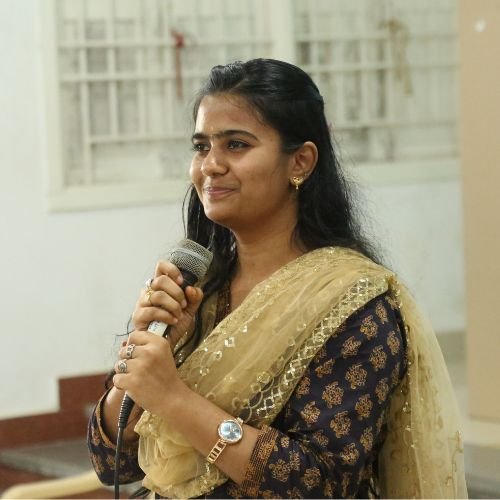
Reshma Krish
Psychologist, Couple Counsellor and Couple Coach
Qualifications: Master’s in Psychology; Internationally Certified Couple Coach; Internationally Certified Life Coach; Neurobics Trainer
Specialisations: Couple and marriage counselling, premarital counselling, student wellness, communication and conflict, trust recovery and Neurobics
Languages: Tamil and English
Availability: Available at Ambattur; available at Thoraipakkam and Tambaram by prior appointment
View Professional Profile →
Jeyapriya J
Psychologist, Couple Counsellor and Couple Coach
Qualifications: Bachelor’s in Psychology; Postgraduate Diploma in Psychological Counselling; Internationally Certified Couple Coach; NLP Coach
Specialisations: Couple and marriage counselling, premarital counselling, communication and conflict, trust recovery and separation support
Languages: Tamil and English
Availability: Available at Ambattur; available at Thoraipakkam and Tambaram by prior appointment
View Professional Profile →Emocare Training and Achievements
Selected moments from Emocare counselling, training and wellness programmes.



Helpful answers
Frequently Asked Questions
Is overthinking a medical diagnosis?
Overthinking is an everyday term, not a standalone clinical diagnosis. Repetitive worry or rumination can occur with several concerns, so assessment is important.
Can counselling stop all unwanted thoughts?
The goal is not to eliminate every thought. Counselling can help people relate to thoughts differently, reduce unhelpful cycles and take useful action.
Is online counselling available?
Yes, subject to suitability, privacy and appointment availability.
Could overthinking be related to anxiety or OCD?
It can occur with anxiety, low mood, OCD and other concerns, but only an appropriate professional assessment can clarify an individual situation.
When is urgent help needed?
Seek urgent help if thoughts involve self-harm, immediate danger, inability to remain safe or severe deterioration in functioning.
When urgent help is needed
If there are suicidal thoughts or tendencies with immediate risk, suicidal behaviour, an attempt at suicide or self-harm, immediate danger, or an inability to remain safe, contact local emergency services or go to the nearest hospital immediately. In India, Tele-MANAS is available at 14416.
Take the next step
Enquire about an online appointment
Send a confidential WhatsApp enquiry to discuss the suitable session mode, centre and available professional.
Counselling access
Choose How You Would Like to Attend
Explore Emocare’s main counselling information, confidential online appointments or in-person counselling at our Chennai centres.
Main Counselling Page
Explore Emocare counselling services, centres, online support and appointment information.
Main Counselling Page →Counselling in Chennai
Explore in-person counselling at Ambattur, Thoraipakkam and Tambaram.
Counselling in Chennai →Explore Emocare Services
Use these frequently requested pages to find the right counselling, learning or appointment information.
Book a Counselling Appointment
Choose an available counselling service and request your appointment.
Online Counselling
Access confidential counselling support online from India or overseas.
Counselling Training
Explore practical counselling training programmes in Chennai and online.
Counselling Internship
Learn about Emocare counselling internship opportunities.
Six-Month Professional Diploma in Counselling & Life Coaching
Explore Emocare’s six-month blended professional diploma in therapeutic counselling and life coaching.
One-Year Professional Diploma
Explore Emocare’s one-year professional diploma in counselling, psychotherapy and life coaching.
Important: This page provides general information and counselling access. It does not diagnose a condition or replace psychiatric, medical or emergency care. Medication must be prescribed and reviewed by a qualified medical professional.
Health-information references: NHS/HRA — Repetitive negative thoughts · NHS — Reframing unhelpful thoughts · Tele-MANAS, Ministry of Health and Family Welfare